 October 2026
Cost of Filing a European Patent Application in 2026
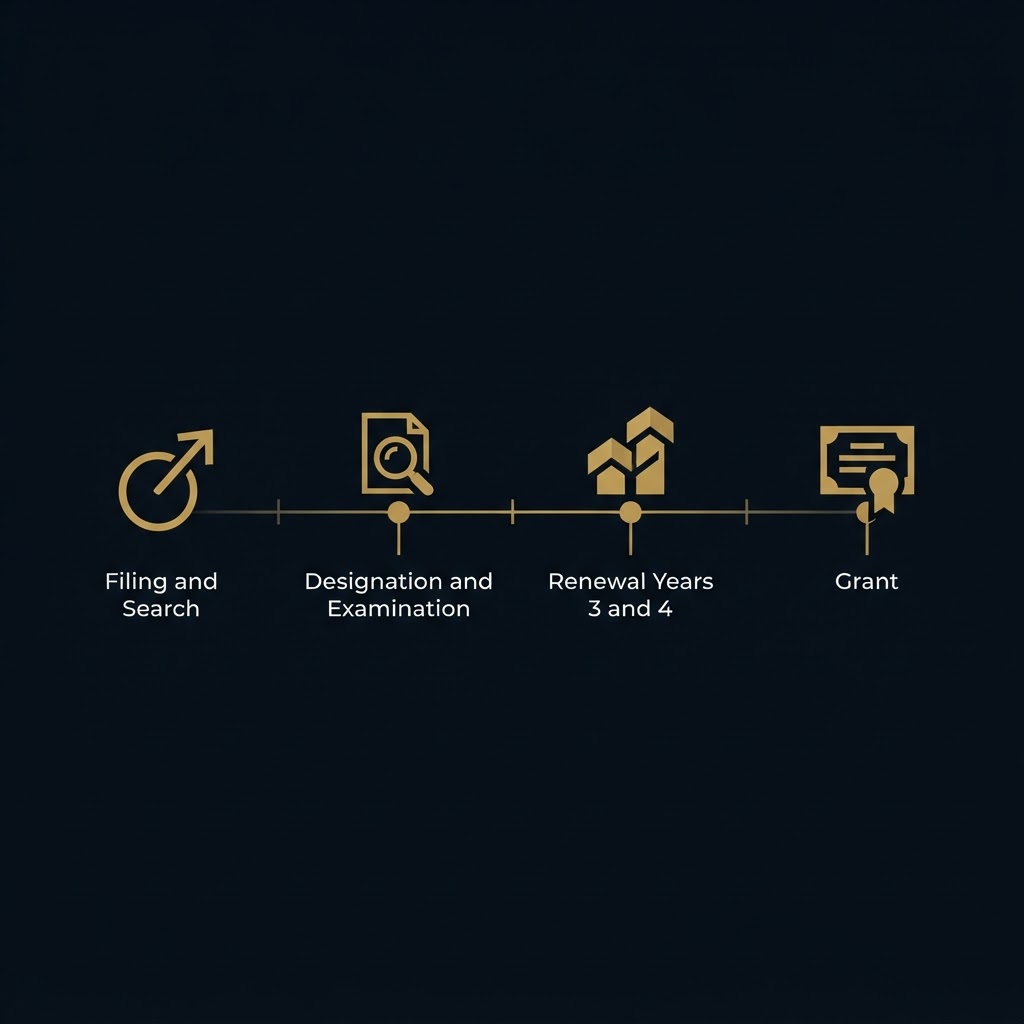
The cost of filing a European patent application is EUR 1,730 in official fees on the day you file online. That is the EUR 135 filing fee plus the EUR 1,595 search fee, both from the EPO fee table in force since 1 April 2026. It is also the smallest number you will see on this page. The EPO itself puts the average official cost of taking an application to grant at about EUR 6,800. Attorney fees sit on top of that and typically add EUR 5,000 to EUR 15,000 over the life of the application. Then come validation and renewals after grant. The useful way to read the bill is not as one number but as a sequence of payments, each due at a different point, each one a chance to stop. That is how the EPO designed it, and it is how we read it at EX IX, because we sit on both sides of the decision: we draft and file patents, and we broker them once they exist. ## The short answer For a direct European application filed online, with up to 15 claims and up to 35 pages, standard fee level: | Stage | Official fees (EUR) | Running total | |---|---|---| | At filing: filing + search | 1,730 | 1,730 | | After the search report: designation + examination | 2,730 | 4,460 | | At grant: grant and publication | 1,135 | 5,595 | | Renewal fees for years 3 and 4, if still pending | 1,610 | 7,205 | Add attorney fees, and a realistic all-in budget to grant lands well into five figures. One firm's published guide puts a granted European patent of ordinary complexity at EUR 20,000 to EUR 30,000 including official fees, written before the 2026 fee changes. ## The ledger: every official fee in the order you pay it All amounts below are from the 2026 schedule (Decision CA/D 9/25), which raised most procedural fees by about 5% but left the filing fee unchanged. ### At filing - Filing fee: EUR 135 online, EUR 285 on paper. Paper costs you EUR 150 for nothing.
- Search fee: EUR 1,595 for a European search.
- Page fee: EUR 17 for the 36th and each later page. A 50 page application adds EUR 255.
- Claims fee: EUR 290 for each claim from the 16th to the 50th, and EUR 720 for each claim from the 51st. Twenty claims instead of fifteen adds EUR 1,450. These fall due within one month of filing. Claims are the line most applicants underestimate. Every claim beyond fifteen costs more than twice the filing fee, so claim count is a drafting decision with a price attached. ### After the search report The search report and its written opinion arrive next. They tell you what prior art the examiner found and how your claims look against it. Only then do the two larger fees fall due: - Designation fee: EUR 720, covering all EPC contracting states.
- Examination fee: EUR 2,010. Both may be paid within six months of the date the European Patent Bulletin mentions publication of the search report. That window is the most valuable thing in the whole fee structure. You get an expert view of your chances before committing the biggest procedural payment. ### While you wait: renewal fees European applications pay renewal fees from the third year, counted from the filing date, whether or not examination has finished: | Year | Renewal fee (EUR) | |---|---| | 3 | 725 | | 4 | 885 | | 5 | 1,050 | | 6 | 1,215 | | 7 | 1,375 | | 8 | 1,540 | | 9 | 1,700 | | 10 and later | 1,865 | A slow prosecution is therefore not free. Each extra year pending is another annual fee before you know whether a patent will be granted. Pay late and you owe a 50% surcharge on top. We cover the mechanics in more depth in our guide to patent annuity fees. ### At grant - Fee for grant including publication: EUR 1,135.
- Claims fees again if you added claims beyond fifteen during examination.
- Translations of the claims into the two EPO languages you did not file in. Total official procedural fees for our sample case, excluding renewals: EUR 5,595. Including renewals for years 3 and 4: EUR 7,205. That sits close to the EPO's EUR 6,800 average, which was published before the April 2026 increases. ## The 30% micro-entity reduction Since April 2024 the EPO has offered a 30% reduction on all main fees in the grant procedure to: - natural persons, meaning individual inventors
- non-profit organisations
- universities and public research organisations
- microenterprises with fewer than 10 full-time staff and annual turnover or balance sheet of no more than EUR 2 million The condition: fewer than five European applications filed in the last five years. You claim it by ticking a box on Form 1001 when you file. As an illustration only: 30% off the EUR 5,595 of procedural fees in our sample would bring them to about EUR 3,917. Which fees count as "main fees" and whether you qualify are best checked in the EPO's free Fee Assistant before you rely on any figure. Small entities filing in an official language of their own state other than English, French or German can also get a reduction on filing and examination fees. For a university spinout or a solo inventor this is the single largest saving available on the official fees. ## The attorney layer Official fees are fixed and published. Professional fees are neither. Here is how one patent firm's guide breaks down where they arise: | Stage | Typical attorney fee (EUR) | |---|---| | Drafting the specification, claims and figures | 3,000 to 6,000 | | Filing and formalities | 500 to 1,500 | | Each examination response (usually 1 to 3) | 1,200 to 2,000 | | Grant and validation | 1,000 to 2,500 | Technology changes the drafting line more than anything else. Another firm's published matrix runs from EUR 3,000 for a 1 to 10 claim mechanical application up to EUR 8,000 for a 16 to 20 claim application in physics, mathematics or AI. Can you skip the attorney? Applicants with a residence or place of business in an EPC contracting state can act for themselves. Everyone else, which includes every US company filing from home, must use a professional representative in all proceedings except the act of filing itself. Even residents rarely go alone, because a weak claim set is the most expensive mistake in this process and it is made at drafting. This is the step where EX IX works. Our drafting and filing service runs a professional novelty search through Patsnap, drafts the specification, claims and figures with AI assistance, and files through an independent licensed patent attorney of record. EX IX is not itself a firm of patent attorneys. For reference, our worked example for a 10 claim German national filing is EUR 4,000 plus official fees. Many applicants file nationally first and then go to the EPO within the 12 month priority year, which spreads the cost over two stages. A novelty search does not guarantee a grant or patentability, and we say so to every client. ## After grant: validation or Unitary Patent Grant is not the end of the bill. A European patent becomes protection in individual countries only after the post-grant step, and you choose between two routes. Classic validation, country by country. Each state may require translations, local filings and its own renewal fees. One firm puts validation at EUR 700 to EUR 2,500 per state, before translation-heavy countries. Unitary Patent. The request for unitary effect is free of charge and covers 18 EU member states with one renewal fee paid to the EPO. Unitary Patent renewal fees for the first ten years total less than EUR 5,000, and SMEs can claim EUR 500 in translation compensation. The EPO's own comparison makes the trade-off concrete. A European patent validated in Germany, France, Italy and the Netherlands and kept to year 12 can cost about EUR 16,527 including external costs. A Unitary Patent over the same period comes to about EUR 11,399, a 31% saving. If you need the UK or Switzerland, which are outside the system, you still validate there separately. ## What the money buys, and what it does not Every euro in the ledger above buys examination. None of it buys a grant, and none of it buys value. That is not pessimism, it is how to read the staging. The EPO splits the bill so you can decide at each stage whether to continue. The applicants who waste money are the ones who treat the stages as a single commitment and pay every invoice on autopilot. Three checkpoints are worth a deliberate decision: 1. Before filing: is there an identified commercial use, a licensee or a product, or only a clever idea? Filing fees are cheap, drafting is not.
- After the search report: if the examiner found close prior art, the EUR 2,730 for designation and examination is the cheapest money you will ever not spend. If you withdraw before substantive examination starts, the examination fee is refunded in full, but the filing and search fees are gone.
- At every renewal: is this application still worth more to someone than the next fee? A pending application is not worthless while you wait. It can be licensed or sold, and buyers price it differently from a granted patent, which we explain in the difference between patent pending and issued. For applicants comparing jurisdictions, we have also broken down what it costs to file a US patent, where the fee structure works very differently. The numbers on this page are official fees and published indicative ranges, not a quote. Your total depends on claims, pages, technology, the course of examination and the countries you choose. ## FAQ ### Is a Euro-PCT application cheaper than a direct European filing? Not on official fees alone. The EPO charges EUR 1,885 for an international search and EUR 2,240 for examination where no supplementary European search report is drawn up, against EUR 1,595 and EUR 2,010 on the direct route. The PCT route mainly defers costs, buying time before you commit to Europe. ### Can I pay a European renewal fee late? Yes, with an additional fee of 50% of the belated renewal fee. ### Do I pay renewal fees for every European country while the application is pending? No. While the application is pending you pay one renewal fee to the EPO. National renewal fees start only after grant, in each country where the patent is validated, unless you choose a Unitary Patent.
We use essential cookies to operate this website and, with your consent, optional cookies to understand site usage. You can accept or decline non-essential cookies at any time. See our Impressum for our contact and legal details.