 August 2026
How to Value a Patent Before You Pay for a Report
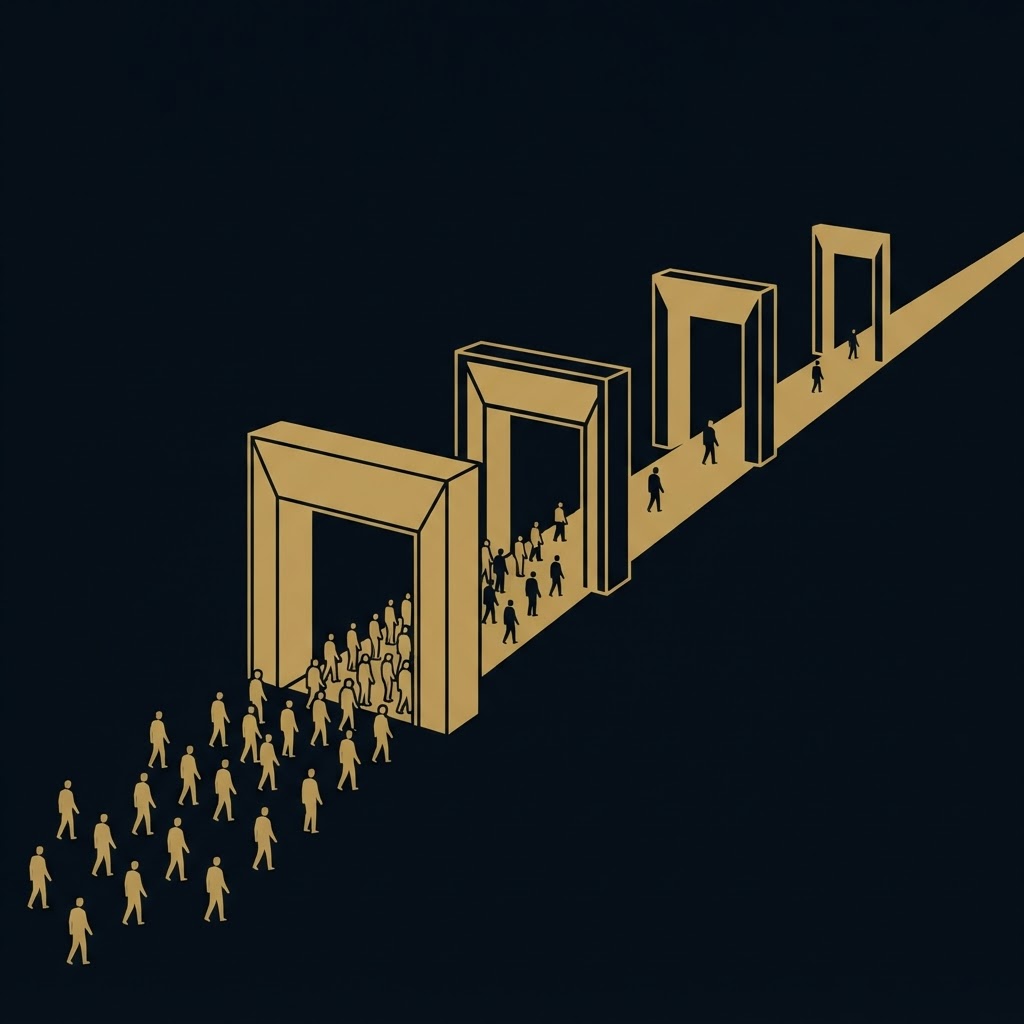
Almost every guide on how to value a patent opens with the three methods. That is the second question. The first one is cheaper and decides more: is this asset in the small minority of patents that have any market value at all?
Put two numbers side by side and the point makes itself. One published fee card for IP valuation work runs 1,800 USD for a single-patent tier up to 21,650 for the in-depth version, with reports fit for external use only from the upper tiers. Meanwhile, on a market basis, the value of roughly 99 percent of issued patents is simply zero, because an acquirer has no reason to take on maintenance costs for an asset nobody is infringing.
So the sensible order is a free triage first, methods second, and a paid report only when something other than curiosity requires one. Here is that sequence.
The base rate you are working against
Liquidity in this market is worse than the analogies suggest. More than 90 percent of patents do not transact at all, while over 90 percent of properties find buyers in the real estate secondary market. Calling a patent broker a realtor for inventions has the odds precisely backwards.
This does not mean your patent is worthless. It means the prior is unfavourable, and that any procedure worth running has to be capable of telling you so before you have spent money finding out. Most valuation products cannot do that. They are built to produce a number, and they will.
The free triage: four gates before you spend anything
Run these in order. Each one can end the exercise. All four use public data and cost nothing but an afternoon.
Gate 1: remaining life
Utility patents run 20 years from the earliest effective filing date. Count the years left, because everything downstream is priced against that window and it only ever shrinks. Value holds up while a decade or more remains and falls off a cliff at the end: one valuation vendor's own retention table puts patents with 15 or more years left at full value and those with under three years left at 5 to 15 percent of it, useful for portfolio cleanup and little else.
If you are inside five years, keep going, but read the rest as a question about salvage rather than a sale.
Gate 2: name the product that reads on your claims
Open your patent, read the independent claims, and list every element in each one. Then name a company selling something on the market today that includes all of those elements. Not something similar. Something that reads on the claim as written.
This gate fails more often than any other, and it is decisive, because an uninfringed patent has little or no value until the industry catches up with the invention. A patent is a right to exclude. With nobody to exclude, there is nothing for a buyer to buy, however good the underlying invention is.
If you cannot name a company, you do not yet have a valuation problem. You have a market timing problem, and the honest next step is the renew, abandon or monetise decision rather than a report.
Gate 3: could you prove that use from the outside
Suppose you named a product. Now ask whether an outsider could demonstrate the infringement from a teardown, a datasheet, a manual or a public filing, without access to the company's internal processes.
This is detectability, and it is the least discussed input that moves prices hardest. A claim that is genuinely being practised inside a factory nobody can inspect prices like a claim nobody is practising. It is the reason our own assessment runs physics-grade claim reconstruction, detectability analysis and validity probability, benchmarked at 0.76 percent mean absolute percentage error against real-world outcomes, before an asset goes anywhere near a buyer. Buyers are not paying for your conviction. They are paying for what they could put in front of a court.
Gate 4: family, prior art and challenges survived
Last, the file itself. How many jurisdictions does the family cover, is it still open, and has the patent ever been attacked and held? The empirical literature is unusually consistent here: backward and forward citations are positively related to value, and patents upheld in opposition and annulment procedures, along with patents representing large international families, are particularly valuable.
You can check most of this for free. Family members and citations sit in any public patent database, and the USPTO Patent Assignment Search covers all recorded assignment information from 1980 to the present, which tells you who has been acquiring patents in your classification. It shows ownership and movement, never price, so treat it as a buyer list rather than a set of comparables.
What the public indicators can and cannot tell you
Vendor pages will now sell you a multiplier table: so many forward citations, so much uplift. Be careful with those, because the research they lean on says something more modest.
The standard model treats claims, forward citations, backward citations and family size as four noisy signals of an underlying quality that nobody observes directly. Conditioning on all four, the remaining variance in quality is about one third of the unconditional variance, with forward citations the single most informative indicator. The same work finds a threshold effect in family size: what carries the information is the decision to file abroad at all, not the number of countries you eventually reached.
Then there is the sterner test, against prices actually paid. Checked against observed Ocean Tomo auction results, forward citations and family size hold up as predictors, but both explain only a small share of the variance in patent value.
Read that as the working rule. Indicators are good enough to rank your own patents against each other and to decide which one deserves attention first. They are not good enough to produce a dollar figure, and any tool that converts them into one is selling confidence it does not have.
Which of the three methods answers your question
Only now do the methods matter, and which one you use depends entirely on what the number is for. The patent office framing is the clean one: cost, market and income, each with disadvantages that rule it out for particular purposes, and the income method is the one most companies prefer.
Income models the cash the patent produces, so it answers what the asset is worth to you, assuming your forecasts hold and the technology still matters in a decade. It needs revenue to work with. If your patent has no product behind it, this method has nothing to chew on.
Cost asks what it would take to obtain equivalent protection today. It is a floor and a bookkeeping figure, not a price, and its weakness is that it ignores future revenue entirely.
Market compares recent transactions, which is the only method that reflects a real counterparty, and it is the one buyers actually use. Its problem is structural: it requires an active market and accessible price information, and the same IAM guide cited above notes that the vast majority of patent transactions are never reported publicly. That is why credible comparables barely exist outside firms that see deal flow.
That mismatch, between the method that produces the biggest number and the method a buyer prices on, is where most disappointment comes from. It has its own explanation in why a valuation report and a real sale price rarely match, and a fuller treatment in the three methods compared side by side.
When a paid valuation is worth buying
There are purposes where you genuinely need a document rather than an opinion. A formal appraisal is the right purchase for M&A transactions, litigation damages testimony, tax reporting on donations or transfers, and IP-backed financing, while internal assessment is enough for maintenance decisions, preliminary licensing talks and strategic planning. The same source prices full expert appraisals at 10,000 to 100,000 USD and up.
Published prices at the lighter end are easier to find than most owners expect. The vendor whose retention table appears above quotes a per-patent appraisal from a registered attorney or valuation firm at 2,000 to 10,000 USD taking two to four weeks, and another firm publishes its report as starting at 5,500 USD with a 50 percent retainer to begin and a first draft usually eight to twelve weeks from commencement.
Set those against a market where most assets do not sell, and the rule writes itself. Buy the report when a court, a tax authority, a lender or an acquirer will require a defensible document. Do not buy one to find out what your patent is worth. The triage above answers that question for free, and more honestly.
Whose incentives are inside the number
Worth saying plainly, including about ourselves. A firm paid to produce a valuation gets paid whether or not the asset ever sells. Owners routinely arrive holding reports produced by firms that have never sold a patent, with expectations set far outside what the market will do.
Our brokerage runs the other way: commission is paid by the seller on completion, the minimum fee is EUR 5,000 per completed transaction, and no sale means no fee. Neither model is dishonest. They simply behave differently in the month an asset turns out to be unsellable, and you should know which one you have hired before you read its number.
Two limits stated in the same breath: EX IX is not a firm of patent attorneys, and a novelty search does not guarantee grant or patentability. Filing work runs through an independent licensed attorney of record.
The afternoon version, in order
- Count the years remaining from the earliest effective filing date.
- List every element of each independent claim.
- Name a company selling a product that includes all of those elements today.
- Ask whether that use is provable from outside the company.
- Check the family: how many jurisdictions, still open, ever challenged and upheld.
- Rank your patents against each other on citations and family, and stop there rather than converting the ranking into a price.
- Decide the purpose. A formal purpose justifies a report. Curiosity does not.
Three outcomes follow. If steps three or four come back empty, the live decision is renewal, not valuation. If they come back with a name and evidence, the question becomes price, which is a different piece of work and starts with what patents actually sell for. And if a lender, an examiner or an acquirer is waiting on paper, commission the appraisal, having first done the free work that tells you what it will say.
FAQ
Can I value my own patent without hiring anyone? For a triage and a rank ordering, yes, and the four gates above cost nothing but time. For a figure that a court, a lender or a tax authority will accept, no. Those need an appraiser whose name goes on the document.
How much does a patent valuation cost? Published fee cards run from about 1,800 USD for a single-patent tier to 21,650 for the in-depth version, another firm starts at 5,500 with a retainer, and per-patent appraisals are commonly quoted at 2,000 to 10,000. Full expert appraisals on portfolios reach 100,000 and beyond.
Do forward citations really predict what a patent is worth? Directionally, and weakly. They are the most informative of the public indicators, but tested against real auction prices they explain only a small share of the variance. Use them to decide which patent to look at first, never to set an asking price.
How do I value a patent that has no revenue behind it? Not with the income method, which needs cash flows you do not have. Use cost as a floor, then go straight to gate two. Whether anyone is practising the claims decides whether that floor is a price or just an accounting entry.
Where can I check who has been buying patents like mine, for free? The USPTO assignment records show every recorded transfer since 1980, searchable by classification and party. You will see who is acquiring in your technology area, which is a buyer list. Prices are not recorded, so it will not give you comparables.
We use essential cookies to operate this website and, with your consent, optional cookies to understand site usage. You can accept or decline non-essential cookies at any time. See our Impressum for our contact and legal details.