 September 2026
How Much Are Patent Renewal Fees? The 20 Year Total
Ask how much patent renewal fees cost and every page hands you one office's table. Three numbers for the United States, an annual ladder for Europe, and no total. That is not the question owners are actually asking. They want to know what it costs to hold the thing to the end.
So here is the arithmetic, done, from the official schedules.
The short answer, in three numbers
A US utility patent held to full term costs $14,470 in maintenance fees at large entity rates. Small entities pay $5,788 and micro entities $2,894.
A Unitary Patent in Europe costs EUR 35,555 in renewal fees over its 20 years.
The same 18 states covered the old way, as a conventional European patent validated country by country, costs EUR 124,440 over the same period, and that is fees alone before a single translation or attorney invoice.
Those numbers are not close together, and the reason is the three variables nobody quotes alongside the fee table: which jurisdictions you are in, what entity size you qualify for, and how many years you actually keep paying. Change any one of them and the answer moves by an order of magnitude.
The United States: three payments, one total
The USPTO charges maintenance fees at exactly three moments, all after grant, at 3.5, 7.5 and 11.5 years. From the USPTO fee schedule, under 37 CFR 1.20(e), (f) and (g):
| Due | Large entity | Small entity | Micro entity |
|---|---|---|---|
| 3.5 years | $2,150 | $860 | $430 |
| 7.5 years | $4,040 | $1,616 | $808 |
| 11.5 years | $8,280 | $3,312 | $1,656 |
| Full term | $14,470 | $5,788 | $2,894 |
Two features of the US system flatter it. Nothing is due while the application sits in examination, so a four year prosecution costs nothing in annuities. And maintenance fees apply only to utility patents, not design or plant patents, while a missed window carries a grace period surcharge of $540 for a large entity, $216 small and $108 micro. The exemption catches out first-time filers who assume every patent carries the same running cost. Miss the grace period too and the patent expires into the public domain.
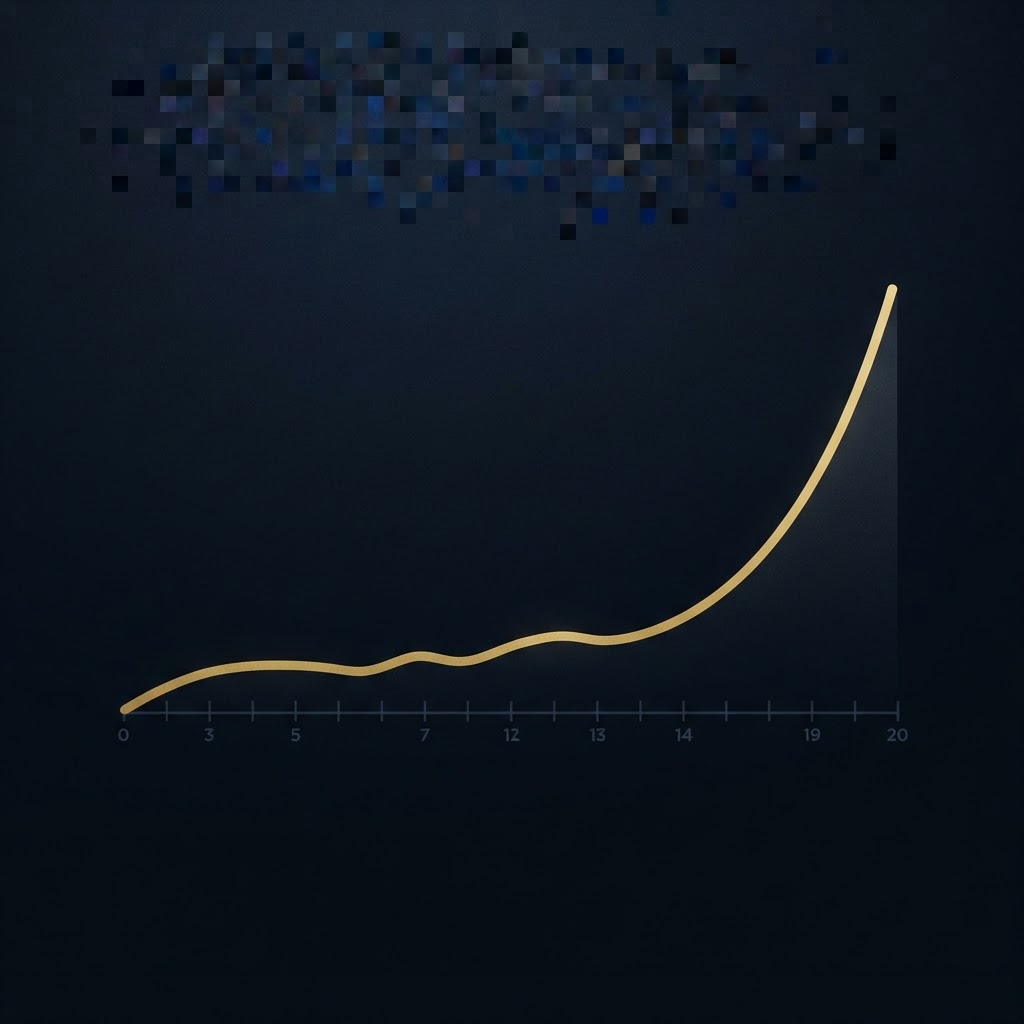
Look at the shape rather than the total. The final payment alone is larger than the first two combined. More than half the lifetime US bill lands in one invoice, at the point where under nine years of term remain.
Europe is two bills, not one
This is the part that surprises owners, and it is where most cost estimates go wrong.
Phase one: the EPO, while the application is still pending
The European Patent Office charges renewal fees on the application, not the patent. They start from the third year, counted from the filing date, and they keep coming annually for as long as examination lasts. From the Rules relating to Fees, the ladder runs 725 EUR in the third year, then 885, 1,050, 1,215, 1,375, 1,540 and 1,700 EUR, reaching 1,865 EUR for the tenth year and every year after it.
A European application that takes six years to grant has therefore paid four renewal fees before the applicant holds anything enforceable.
Phase two: national annuities, or one Unitary fee
At grant the EPO stops collecting and the money goes elsewhere. Under Article 141 EPC, national renewal fees may only be charged for the years following publication of the grant, so there is no double payment, but there is multiplication: each validation state produces an independent annuity stream, with its own due date, its own grace period, its own surcharge rule and often its own currency. Validate in Germany, France and the United Kingdom and one prosecution has become three payment schedules.
The alternative, available since 2023, is a single Unitary Patent fee paid to the EPO in euros. The EPO publishes the comparison itself, using national fees as of 1 April 2026:
| Unitary Patent | Conventional EP, 18 states | EP, 27 states | |
|---|---|---|---|
| Year 2 | EUR 35 | EUR 243 | EUR 321 |
| Year 10 | EUR 1,175 | EUR 5,133 | EUR 7,022 |
| Year 20 | EUR 4,855 | EUR 14,778 | EUR 21,142 |
| 20 year total | EUR 35,555 | EUR 124,440 | EUR 175,920 |
Source: Cost of a Unitary Patent, EPO. The same page notes that the Unitary fee level was deliberately set to match the combined renewal fees of the four countries where European patents were most often validated in 2015, and that a statement on licences of right cuts it by a further 15 percent.
That last mechanism is worth pausing on. Declaring publicly that you will license the invention to anyone reduces the cost of keeping it. The system pays you to stop hoarding.
What the national ladders actually add up to
If you are validating rather than going unitary, the arithmetic is per country. Two of the most-validated:
Germany. The DPMA ladder runs from 70 EUR in the third patent year to 2,030 EUR in the twentieth, with the same schedule applying to a European patent validated in Germany as to a national German one. Add every year from the third to the twentieth and the published schedule sums to 14,160 EUR.
France. The INPI ladder starts at 38 EUR for years two through five and climbs to 800 EUR in year twenty. Summed across years two to twenty, that is 5,910 EUR. Note that the French SME and natural-person reductions do not apply to European patents validated in France, so a validated EP pays the full rate from the start.
Those two totals are arithmetic on the published schedules rather than figures either office quotes, but the schedules are the schedules. Germany and France alone on one family is roughly 20,000 EUR across the term, for two countries out of a possible twenty-seven, before translations, before the validation formalities, before anyone bills you for docketing the payments.
Outside Europe and the US, the same curve
The design is universal, only the cadence changes. China charges CNY 900 per year in years one to three, stepping up in blocks to CNY 8,000 per year for years sixteen to twenty. Japan uses a base plus per claim structure, from 4,300 yen plus 300 yen per claim in the early years to 59,400 yen plus 4,600 yen per claim from year ten.
The Japanese structure has a consequence people miss at drafting time. Every additional claim becomes a recurring annual expense for the life of the patent. A broad twenty claim filing is not just more expensive to draft, it is more expensive to hold for two decades.
The bill is back-loaded, and that is the whole design
Put every schedule above side by side and one pattern holds across all of them. Cheap at the start, punishing at the end.
That is not an accident of budgeting. Escalating annuities exist to clear out assets nobody is using, because a monopoly that cost nothing to keep would never be released. The fee is the system asking, every few years, whether this thing is still worth holding.
Owners answer honestly, and increasingly the answer is no. USPTO payment records show roughly 60 percent of patentees now abandon before full term, with the full-term maintenance rate down to about 40 percent, near its lowest level in two decades, while the 11.5 year large entity fee has risen from $3,100 in 2001 to $8,280, well above inflation over the same period.
So the honest answer to how much patent renewal fees cost, for most owners, is: less than the total. Most patents never reach the expensive part, because their owners look at the invoice and decide the asset is not worth it.
What to do with the number once you have it
The total is not a budget line. It is a valuation input, and it works in both directions.
A buyer inherits the remaining ladder along with the patent. That is why a patent sitting immediately before a large payment is a harder sell than the identical patent sitting just past one, and why the renewal calendar quietly sets the timetable for any sale. If the asset has a future owner, the deadline is a clock, not a bill. Which of the three answers applies to a given patent is a separate exercise, and we have written it out in full: renew, abandon or monetise.
Two practical notes for owners weighing that. Compare the remaining ladder against what it cost to get the patent in the first place rather than against zero, because sunk cost and forward cost are different questions. And check whether those payments are deductible before you treat the gross figure as the real one.
If the answer is that somebody is using the technology and it is not you, the next question is pricing, which is how to value a patent against what a buyer would actually pay rather than what a report says. On the process itself, watch who carries the risk. Our own brokerage is success-based: commission is paid by the seller on completion, with a minimum fee of EUR 5,000 per completed transaction, and no sale means no fee. That is worth checking in any intermediary you speak to, because a firm invoicing you upfront is paid whether or not the renewal question ever resolves.
FAQ
How much are patent renewal fees in total over 20 years? In the United States, $14,470 at large entity rates across the three maintenance payments, $5,788 for a small entity and $2,894 for a micro entity. In Europe, EUR 35,555 for a Unitary Patent across the full term, or EUR 124,440 for a conventional European patent maintained in the same 18 states.
Do you pay renewal fees before a patent is granted? In the United States, no. Fees start only after grant. At the EPO, yes, from the third year counted from the filing date, so a long examination means paying annually on an application that is not yet an enforceable right.
Is a Unitary Patent cheaper than validating in several countries? On the EPO's own published figures, EUR 35,555 over 20 years against EUR 124,440 for a conventional EP covering the same 18 states, before translation and attorney costs. Filing a statement on licences of right reduces the Unitary fee by a further 15 percent.
How many patent owners actually pay all the renewal fees? About 40 percent of US patentees pay all three maintenance fees and take the patent to full term, near the lowest rate recorded in two decades. Roughly 60 percent stop earlier.
Does a bigger patent family cost proportionally more to maintain? More than proportionally in some offices. Japan charges a per claim annuity on top of the base fee, so a broadly drafted patent carries a higher recurring cost for its whole life, and every extra validation state adds an independent annuity stream on its own deadline and in its own currency.
We use essential cookies to operate this website and, with your consent, optional cookies to understand site usage. You can accept or decline non-essential cookies at any time. See our Impressum for our contact and legal details.