 September 2026
Is Selling a Patent an Investing Activity? Cash Flow Rules
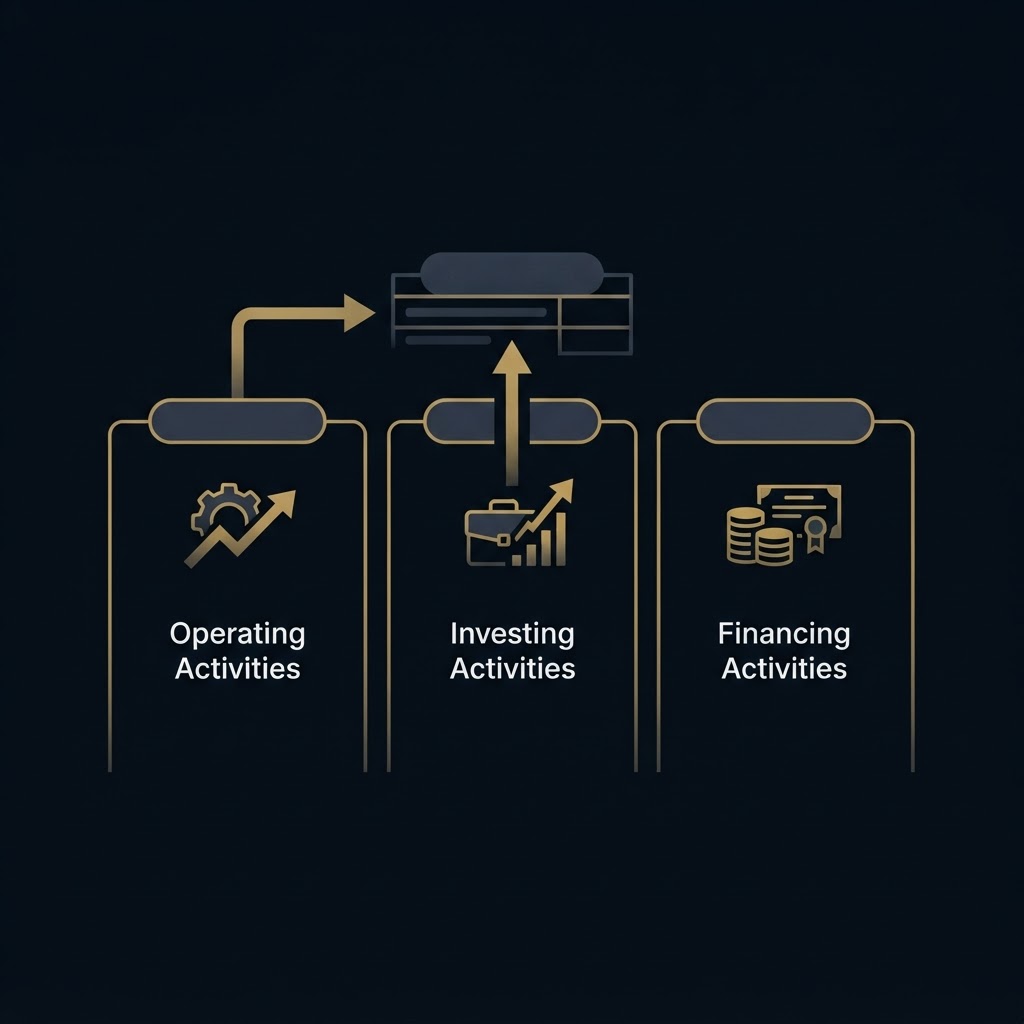
Is selling a patent an investing activity? Yes. The cash you receive when you sell a patent goes in the investing section of the statement of cash flows, under both IFRS and US GAAP. That is the one-word answer every homework site gives you.
What they skip is the part that actually costs marks, and occasionally costs a finance team an audit adjustment: where the gain on the sale goes, and the cases where patent cash is not investing at all. We sell and broker patents for a living at EX-IX, so we see both sides of these deals. Here is the full answer, tied to the paragraphs of the standards themselves.
The short answer
Under IFRS, IAS 7 paragraph 16(b) lists "cash receipts from sales of property, plant and equipment, intangibles and other long-term assets" as an example of investing cash flows. A patent is an intangible. Done.
Under US GAAP, ASC 230 classifies the acquisition and disposal of "property, plant, and equipment and other productive assets used in the production of goods or services" as investing, as PwC's guide to ASC 230 summarises. A patent your company uses to protect its products is a productive asset. Same answer.
So the line on the statement reads something like "Proceeds from sale of patent", as a positive number, inside cash flows from investing activities.
Why a patent sale lands in investing
IAS 7 defines investing activities as "the acquisition and disposal of long-term assets and other investments not included in cash equivalents." The logic is simple. Investing cash flows show what a company spends on resources meant to generate future income, and what it recovers when it lets them go.
A patent fits that exactly. You do not buy or file one to resell it next week; you hold it for years to protect a product line or earn licence income. Accounting for Management groups patents with copyrights, trademarks and goodwill as intangible fixed assets and treats their purchase and sale as investing for that reason.
If you want proof that the IFRS bodies read paragraph 16 this literally, look at football. When clubs asked how to present transfer fees received for players, the IFRS Interpretations Committee answered that IAS 7 lists cash receipts from sales of intangibles as investing, so those receipts go in investing activities. A player registration and a patent are both intangibles. The reasoning transfers directly.
Where the gain goes: the indirect-method trap
This is where exam answers go wrong. Suppose a company sells a patent. The numbers below are illustrative only, round figures chosen to show the mechanics:
- Carrying amount of the patent on the balance sheet: 60,000
- Cash received from the buyer: 100,000
- Gain on sale recognised in profit: 40,000
The full 100,000 is the investing inflow. Not the 40,000 gain, and not a split between the two. PwC notes that even though the gain could in theory be seen as a separate source of cash, ASC 230-10-45-12(c) precludes that bifurcation. IAS 7 paragraph 14 says the same thing in plainer words: a sale of plant may give rise to a gain included in profit, but "the cash flows relating to such transactions are cash flows from investing activities."
Now the trap. Most companies prepare the operating section with the indirect method, starting from net income. That net income already contains the 40,000 gain. If you leave it there, the gain is counted twice: once inside operating, once inside the 100,000 investing inflow.
So you subtract it. BDO's ASC 230 guide lists "gains or losses on sales of PP&E, intangibles, and discontinued operations" among the standard reconciling items. The illustrative statement then looks like this:
| Section | Line | Amount |
|---|---|---|
| Operating (indirect) | Net income (includes the gain) | X |
| Operating (indirect) | Less: gain on sale of patent | (40,000) |
| Investing | Proceeds from sale of patent | 100,000 |
A loss works the other way round. Sell that same patent for 50,000 and you book a 10,000 loss, add the 10,000 back in operating, and report 50,000 in investing.
When patent cash is not investing
The one-word answer holds for most companies. It breaks in three places.
Licence royalties are operating
Licensing is not selling. If you keep the patent and license it, the royalties you collect are income from using the asset, not proceeds from disposing of it. IAS 7 paragraph 14(b) lists "cash receipts from royalties, fees, commissions and other revenue" as operating cash flows. This is why the sell or license decision changes more than your deal terms; it changes which section of the statement the cash shows up in. We cover the business side of that choice in whether to license or sell your patent.
When selling patents is your business
The investing classification rests on the patent being a long-term productive asset. BDO's summary of ASC 230 defines productive assets as those used in producing goods or services "other than materials that are part of the entity's inventory." IAS 7 paragraph 14 has a parallel carve-out: cash for assets held for rental and then routinely sold, under IAS 16 paragraph 68A, is operating, and so are the receipts when they are sold.
Neither standard names patents here, and we will not pretend it settles the question. But for an entity whose ordinary business is acquiring and reselling patents, the standards' logic points towards operating rather than investing. Treat that as a judgment for your auditor, documented in your accounting policy, not as a rule you can lift from a quiz.
Buying a patent is an investing outflow
The mirror image, and a common exam pair. IAS 7 paragraph 16(a) lists "cash payments to acquire property, plant and equipment, intangibles and other long-term assets" as investing, including capitalised development costs. Pay a seller for a patent and you show a negative number in investing.
Exam cheat sheet
The classic list, answered with the rules above:
| Item | Where it goes |
|---|---|
| Proceeds from sale of patent | Investing inflow (full amount) |
| Gain on sale of patent | Deducted from net income in operating (indirect method); not a cash flow itself |
| Loss on sale of patent | Added back to net income in operating (indirect method) |
| Cash paid to acquire a patent or copyright | Investing outflow |
| Amortization of patent | Non-cash; added back in operating (indirect method) |
| Royalties received from licensing a patent | Operating inflow |
| Patent sold by an entity whose business is dealing in patents | Likely operating; auditor judgment |
What this means if you are actually selling one
The cash flow line is the last thing that happens in a patent sale. Before any accountant books "proceeds from sale of patent", someone has to find a buyer, agree a price, and close an assignment.
That front end is where most patents stall. Our brokerage runs it as an M&A-style process: valuation, buyer targeting, controlled outreach and deal support to close. The seller pays a success commission only on completion, with a minimum fee of EUR 5,000, so there is no fee if there is no sale.
If you are earlier in the process, start by learning to value the patent before you sell it, then read how selling a patent works, from assignment to recordal. The classification is easy once there is a sale to classify.
FAQ
Is the gain on sale of a patent an operating activity?
No. The gain is not a cash flow on its own. Under the indirect method it is deducted from net income in the operating section, so the full sale proceeds appear exactly once, in investing.
Is patent amortization shown on the cash flow statement?
Only as a non-cash adjustment. Under the indirect method, amortization is added back to net income in the operating section because no cash moved when it was expensed.
Does classifying the sale as investing decide how it is taxed?
No. Cash flow classification is a presentation rule under IAS 7 or ASC 230. Tax treatment is set by tax law in each country and follows its own tests, as with how renewal fees are treated for tax. Ask a tax adviser about the sale itself.
Is selling a patent a financing activity?
No. Financing covers changes in contributed equity and borrowings, per the IAS 7 definition. Selling an asset you own changes neither, so it is investing (or, for a patent dealer, possibly operating).
We use essential cookies to operate this website and, with your consent, optional cookies to understand site usage. You can accept or decline non-essential cookies at any time. See our Impressum for our contact and legal details.