 November 2026
European Patent Validation Costs: Country by Country (2026)
European patent validation costs arrive at the worst possible moment: the day the EPO announces grant. That announcement does not give you protection anywhere yet. It gives you three months from the mention of grant to bring the patent into force country by country, and every country sends its own bill.
That bill has three lines: a translation, a national fee and, in many states, a local agent. One firm's guide puts the total at EUR 700 to EUR 2,500 per state, before the translation-heavy countries. Most applicants budgeted for filing and examination (we broke that ledger down in our guide to the cost of filing a European patent application). Far fewer budgeted for this.
At EX IX we draft and file patents, and we broker them once they exist. From both sides, validation looks the same: it is not paperwork, it is the decision that fixes where your patent exists for the rest of its life, and therefore what a future buyer or licensee can actually acquire.
The short answer
- Deadline: three months after grant is published, in most states.
- Per country: EUR 700 to 2,500 is a realistic professional range, and the spread is driven almost entirely by translation.
- A typical four-country spread: the EPO estimates that a European patent validated in Germany, France, Italy and the Netherlands and kept to year 12 costs about EUR 16,527 including external costs, against EUR 11,399 for a Unitary Patent. Four is also the average number of Unitary Patent states in which European patents are validated.
- The cheap countries: Germany, France, the UK, Ireland, Belgium, Luxembourg, Switzerland, Liechtenstein, Monaco and Malta need no translation of a patent granted in English.
The three line items in every country
Every validation bill, in every state, is built from the same three components: service fees, official fees and translation fees. Official fees often scale with the number of words, claims or pages, so a long patent costs more everywhere, not just where it has to be translated.
Translation
Translation is the big one. Before the London Agreement took effect on 1 May 2008, translations could account for up to around 40% of the total cost of a conventionally validated European patent. The Agreement cut that sharply for its members, but it did not abolish it: 16 states still want the full specification in their own language.
Prices are quoted per source word. One German agency publishes rates of EUR 0.16 per word into Spanish or Italian and EUR 0.14 into Polish, with ISO 17100 revision included. Patent translation is priced above ordinary technical translation because a mistranslated claim can narrow what you actually own.
National validation or publication fee
Most states charge one, but not all. Germany, France, Italy, the UK, Belgium, Ireland, Luxembourg, Malta, Monaco, Switzerland and Liechtenstein charge none. Where a fee exists it is usually modest next to translation. Spain, for example, charges EUR 278.28 for an electronically filed translation plus EUR 11.19 for each page beyond 22.
Local representative and service fees
Some 24 states require you to act through a local professional representative, including Austria, Spain, Poland, Portugal, Switzerland and Türkiye. That fee is pure professional time, and it tends to land in exactly the countries that also require a full translation. So the expensive countries are expensive twice.
Country groups: what a patent granted in English needs
This is the table that drives the whole budget. It assumes the European patent was granted in English.
| Group | Countries | What you file | Relative cost |
|---|---|---|---|
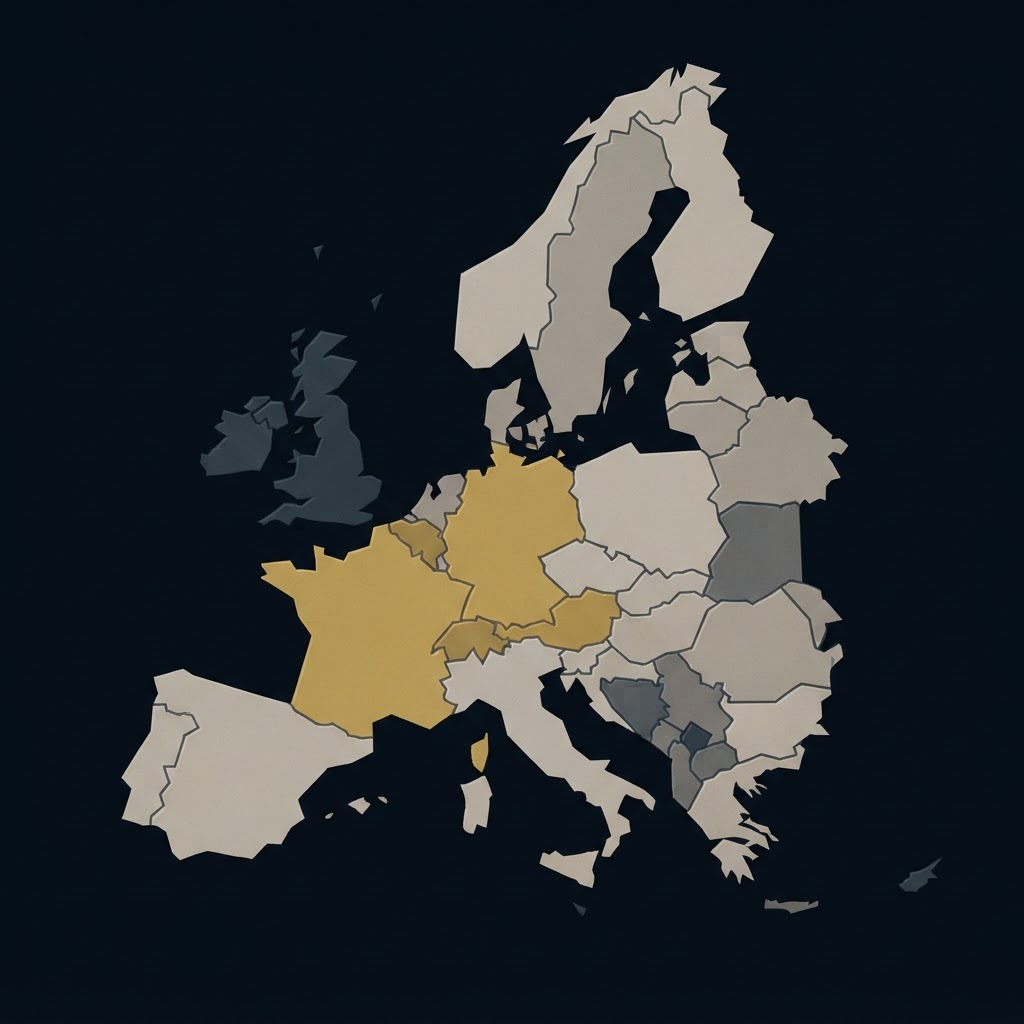
| No translation | Belgium, France, Germany, Ireland, Liechtenstein, Luxembourg, Malta, Monaco, Switzerland, UK | Nothing to translate; Malta and Switzerland need a local agent | Lowest |
| Claims only | Albania, Croatia, Denmark, Finland, Hungary, Iceland, Latvia, Lithuania, Montenegro, Netherlands, North Macedonia, Norway, Slovenia, Sweden | Claims in the national language, description stays in English | Moderate |
| Full translation | Austria, Bulgaria, Cyprus, Czechia, Estonia, Greece, Italy, Moldova, Poland, Portugal, Romania, San Marino, Serbia, Slovakia, Spain, Türkiye | The entire specification in the national language | Highest |
The claims-only group is cheaper than it sounds because claims are short. A Finnish firm, for example, offers a fixed validation package of EUR 990 in Finland and EUR 890 in Sweden for claims up to 1,000 words, covering the claims translation, the filing and the official fee.
The deadline is not a formality. Every EPC state has provided that if you miss its requirements, the European patent is deemed void ab initio in that state, as if it had never had effect there, and in most states the time limit cannot be extended.
A worked example
Here is the arithmetic for one plausible selection. This is an illustration built from the published rates above, not a quote: your word count, language pair and provider will move every number.
Take a patent granted in English with a 7,000-word specification, validated in seven countries.
| Country | What it needs | Illustrative cost driver |
|---|---|---|
| Germany, France, UK | No translation, no fee | Professional filing time only |
| Sweden | Claims only | EUR 890 fixed package |
| Italy | Full translation, no fee | 7,000 words x EUR 0.16 = EUR 1,120 |
| Spain | Full translation, fee, accredited translator | EUR 1,120 translation + about EUR 278 fee |
| Poland | Full translation, local agent | 7,000 words x EUR 0.14 = EUR 980, plus agent |
Read the table from the top down. The three biggest markets in the selection cost the least. The three full-translation countries carry more than EUR 3,200 in translation alone before any agent touches them, and that is the number that makes people reconsider Spain and Poland.
Then remember that validation is a one-off, while patent maintenance fees by country are not. Every state you validate in sends a renewal invoice every year until you stop paying. The real cost of adding a country is its validation fee plus up to 17 years of its renewals.
Unitary Patent or classic validation
Since June 2023 there has been a second route. A Unitary Patent covers 18 EU states with one request, one translation and one renewal fee paid to the EPO.
The EPO's own numbers make the case at scale. A conventional European patent validated in all 18 participating states and maintained from year 5 to year 12 costs EUR 75,750, against EUR 11,701 for a Unitary Patent, because the classic route needs translations into up to 14 languages. Renewal fees for a Unitary Patent come to under EUR 5,000 for the first ten years, and a statement on licences of right cuts them by a further 15%.
The comparison is closer than that headline when you only need a few countries:
- At four countries (DE, FR, IT, NL), the Unitary Patent saves 31% to year 12. That is roughly the break-even point: the EPO's own reading is that the more participating states you would otherwise validate in beyond four, the more the Unitary Patent saves.
- If you also need the UK and Switzerland, which are outside the system, a Unitary Patent plus separate UK and Swiss validation comes to EUR 16,356 to year 12, against EUR 16,527 for the four-country classic route. Close to a tie.
- Spain and Poland are not in the Unitary Patent either, so they always mean classic validation, with the full translation and fees above.
The Unitary Patent is not translation-free yet. During a transitional period running to 1 June 2035, you still file one full translation. SMEs, universities and individual inventors can claim EUR 500 in translation compensation for it. The two routes also combine: many proprietors take a Unitary Patent for the EU core and validate classically in the UK, Switzerland or Spain alongside it. If that is your plan, the year-by-year fee curve is in our guide to Unitary Patent renewal fees.
Which countries are worth paying for
The cost table tells you what each country charges. It does not tell you which ones are worth it. Three questions do.
Where would you sue? A patent you will never enforce in a country is a renewal invoice, not protection. Validate where you could and would act: where infringers manufacture, sell or import.
Where is the market a buyer cares about? This is the broker's question. When a patent changes hands, the buyer acquires the countries it is in force in, nothing more. A patent alive only in Germany and France is a narrower asset than one covering the Unitary Patent territory plus the UK, and it will be priced that way. Territory is one of the inputs we weigh when we look at how to value a patent.
Can you afford the tail? Validation is cheap compared with the renewals that follow. Choose a set of countries you can keep paying for until the patent either earns money or is sold. Dropping countries later is allowed. Adding them after the deadline is not.
EX IX handles both ends of this decision. Our drafting and filing service works through an independent licensed patent attorney of record, who carries out validation filings; EX IX is not itself a firm of patent attorneys. When a patent is ready to sell, our brokerage is success-based: the seller pays a commission only on completion, with a minimum of EUR 5,000. No sale, no fee. Neither service guarantees a grant, a buyer or a price.
FAQ
What happens if I miss the validation deadline?
The patent is treated as never having had effect in that country. A few states allow relief: Spain lets you extend its three-month period by two months on request, and offers restitution if you missed it despite due care. Most states do not, so put the date in your diary the day grant is announced.
Can I use machine translation for validation?
Check the state first. Spain, for example, requires proprietors based outside Spain to use a patent attorney accredited by the Spanish office, a sworn translator, or a professional with C2 command of both languages and a technical degree or a track record of at least 20 patent translations. A raw machine translation will not meet that bar.
Do I need a translation if the patent is ever litigated?
Possibly. Even in London Agreement states that waive translation at validation, a full translation into the national language may be required if the patent becomes the subject of a dispute there. Budget for it as a litigation cost, not a validation cost.
We use essential cookies to operate this website and, with your consent, optional cookies to understand site usage. You can accept or decline non-essential cookies at any time. See our Impressum for our contact and legal details.